Did you know? #4 Displacement-Length Ratio (DLR)

A few weeks ago, we’ve explained here the SA/D ratio.

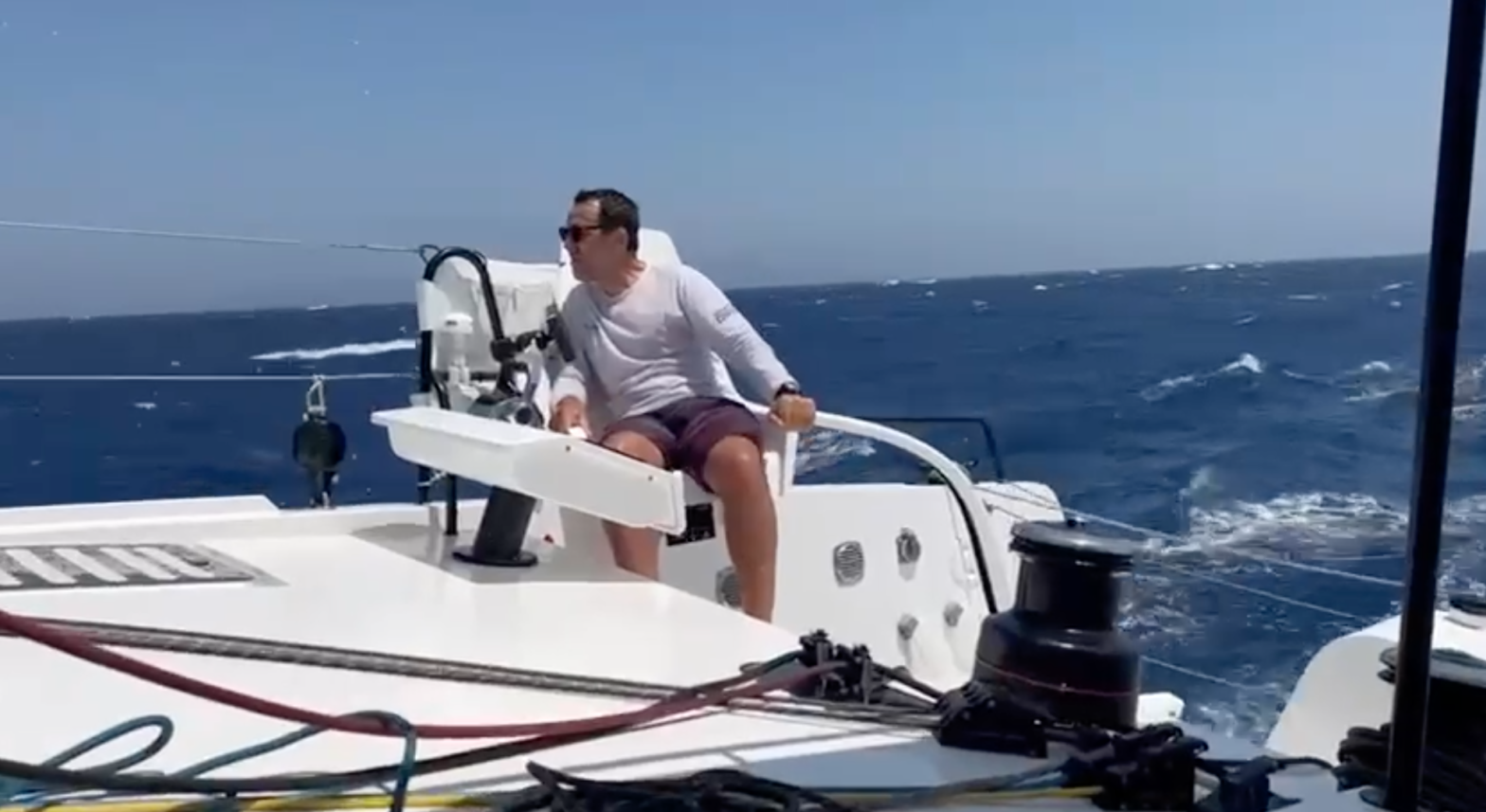
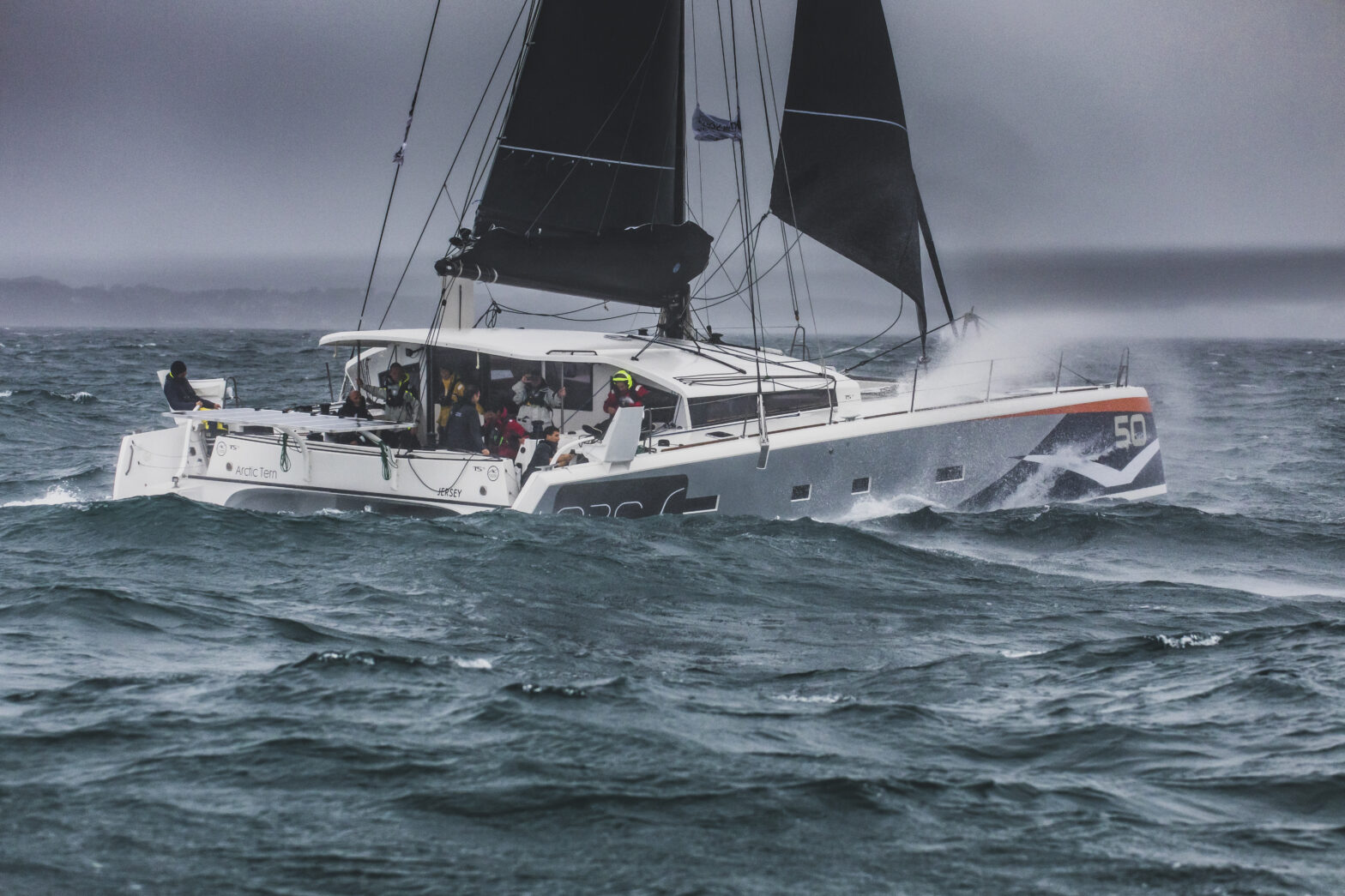
Another ratio is also commonly used to compare the efficiency and power of cruising yachts: it’s the DLR or D/L ratio. It is a pretty good indicator of the “sea motion” for a yacht, since it will figure how a hull will behave in/on the sea, should it be a long frequency swell or in choppy conditions.

Once again, please note that these ratios have originally been created to compare monohulls, but they could be used for multihulls, too. In both cases, a lower figure would mean excellence, a higher one a relative mediocrity.

In this ratio, with no surprise, a high displacement will boost the value, where an important length will lower it down. For the record, a ratio of 90 is considered “ultra-light” for a monohull, where a ratio of 360+ will be considered “ultraheavy”.

Why is this ratio interesting when comparing fast cruising catamarans?

Because it will underline the fact that, with a given length, a decent displacement will become a factor of performance. And in the case of a fast cruising cat, we’d better have hulls not going too much into the waves, as it would generate a resistance synonym of suddenly decreasing speed. Speed that can be gained by a light displacement will enable the cat to stay on the waves and not in them, and to stay on top of the crests in choppy seas.

Here is the formula:

If you’re looking to acquire a fast cruising catamaran, we invite you to take other catamarans numbers (length at the waterline and light displacement) and to compare their ratios to the ones of the ORCs.

  • For our ORC50, the DLR is 78.
  • For our ORC57, the DLR is 59.

So, what’s your conclusion?
Let us know here!

Fair winds,
The ORC Team

Composite: a default-less result thanks to ORC quality control

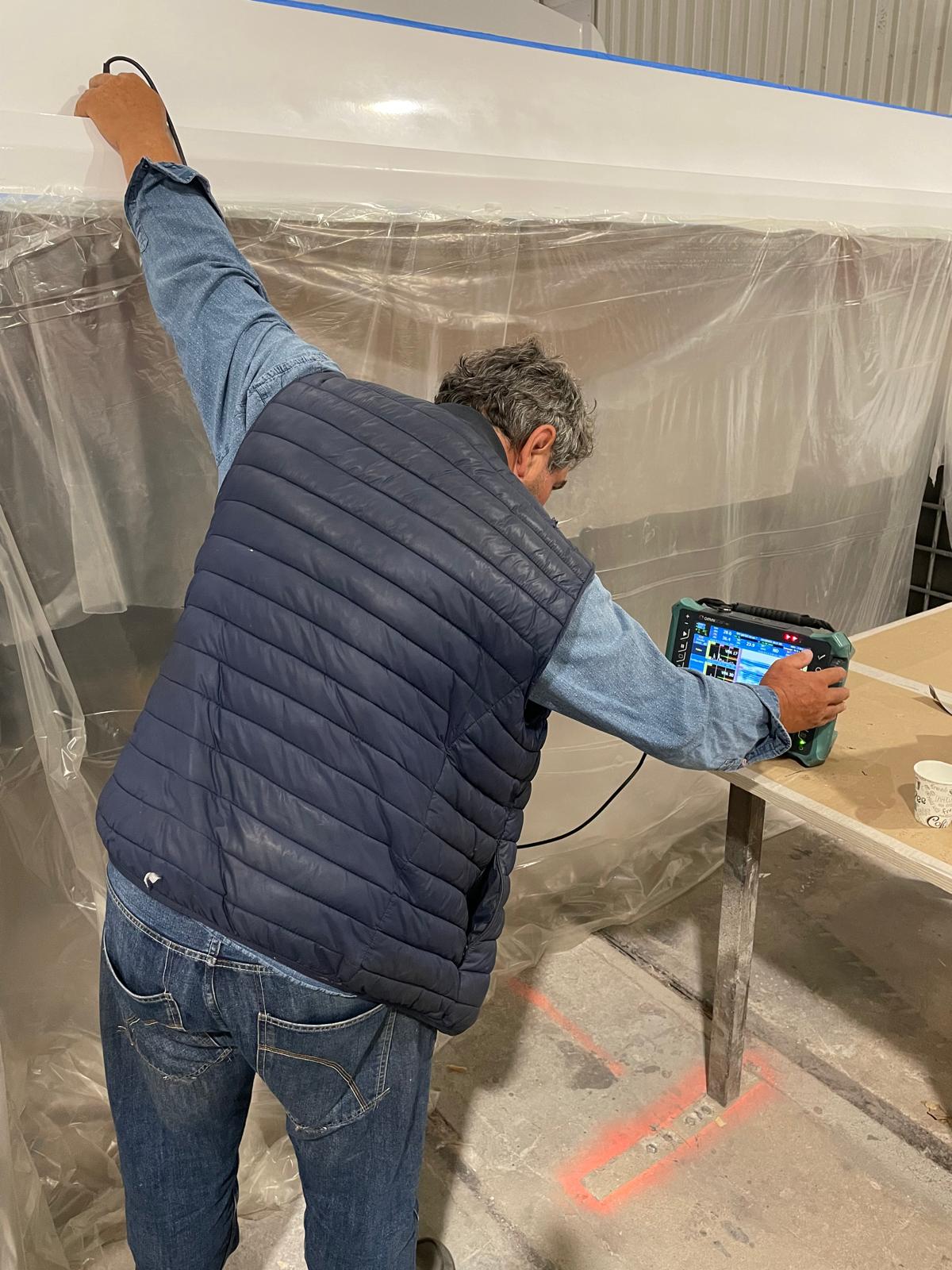
A composite-built boat is synonym of quality and sustainability. To guarantee these criteria, we, at ORC, have put in place extremely rigorous control processes. Among the potential defaults we look for, air bubbles in the composite are on top of the list. No worries, our external expert is here to spot them!

Air bubbles: the worst enemy of solidity

Air bubbles in the composite are not visibly by the human eye, but they could jeopardize the resistance and life duration of a piece. These micro-cavities are potentially weak points, since they could later crack, especially under the effect of effort and load constraint. This is why detecting them in advance is a crucial step in the building process.

The expert’s tool: ultrasound scanner

Our external expert used high-tech tools to detect air bubbles. The ultrasound scanner enables him to visualize the interior of the infused pieces and detect potential anomalies.

These waves pass through the material and are reflected when they encounter an interface, such as an air bubble, a crack or a change in the density of the material.

Careful repair for an optimum reliability

When an air bubble is detected by our external expert, our teams promptly react and proceed to a repair. Our technicians will make sure that the solidity and waterproofing are indisputable. This process ensures every single piece is compliant with our quality standard..

Peace of mind for the owners

Thanks to its meticulous quality control, ORC offers to its future owners a guarantee of tranquility and safety. When you acquire a boat from our shipyard, you know that she’s going to last and be safe.

Air bubbles are not welcome in the composite boat building process! At ORC, thanks to the joined effort of our external expert and our reputed teams, using state-of-the-art technology, we do best on a daily basis to offer impeccable products.

Visit our shipyard to better understand how we proceed!

Composite boat building techniques / Talents@ORC, episode 2: infusion

Building a composite fast cruising catamaran consists in a succession of steps, but is also the output of a know-how. 

In this new original series of videos, you’ll discover in each episode one of these steps, giving birth to each ORC, but also the people and talent behind this knowledge. 

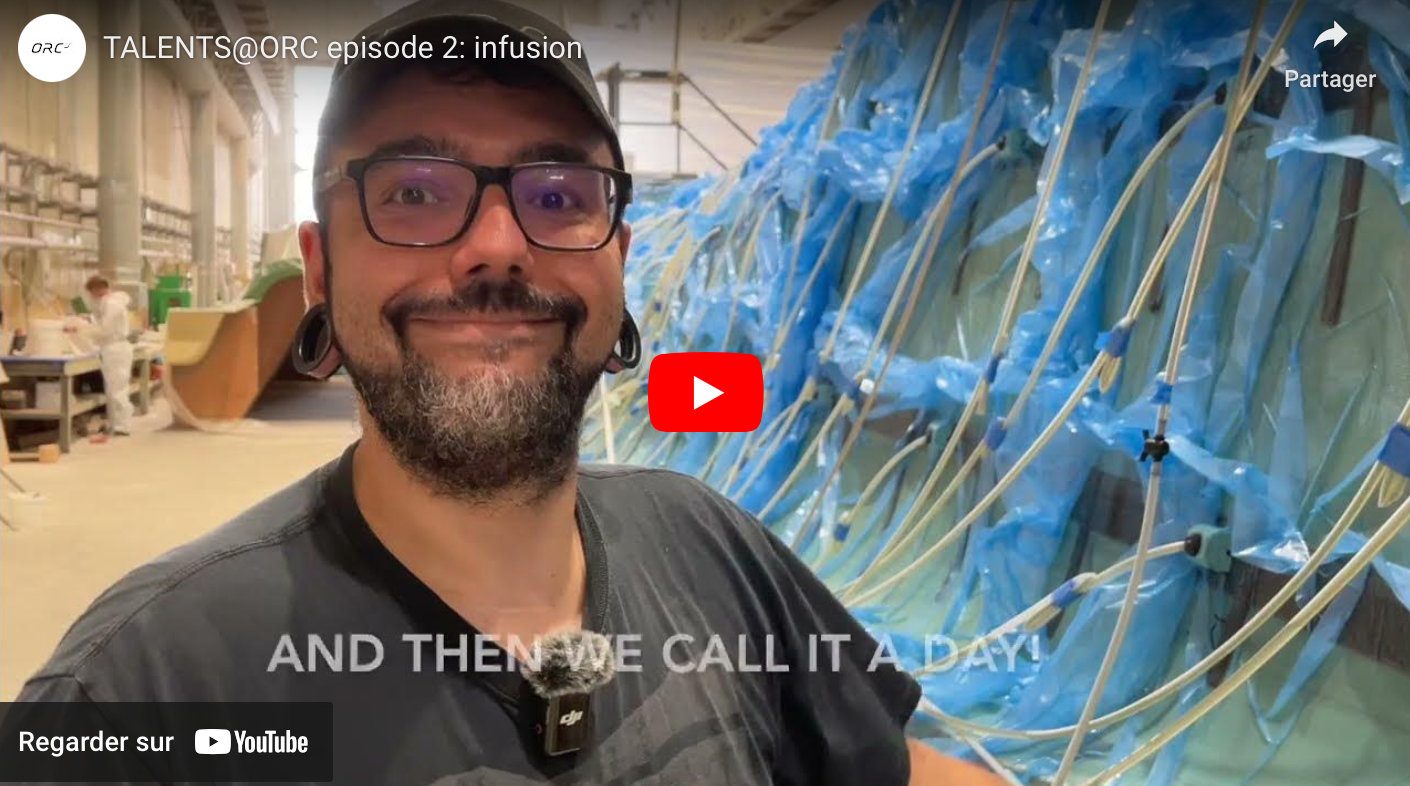
Today, let’s discover what “infusion” is all about, with Sebastien.

Infusion consists in injecting resin to seal a fiberglass and foam sandwich. Let’s see how:

If you’re interested in knowing more, come and visit us and meet with our team, let us know here

See you soon!

The ORC Team

Launching the ORC50#26: who’s next???

Here we are! Yesterday, she gently splashed and got masted. Soon she will be tested by our expert team, before final delivery. This 3-cabin version of the ORC50 belongs to a couple of passionate sailors, who will have her moored in the Med before slipping lines for a circumnavigation. Highly customised, « RAPA ITI » have everything you could dream of for such a programme. 

Splashing is always a magical moment, that we have captured here:

Next week we’ll show you her inside parts. 

Who’s next?

Stay tuned!

The ORC Team

Composite boat building techniques: the foam sandwich

Last week we detailed the draping step in a video you can watch here.

As mentioned, the next step consists in displaying all over the pieces (hulls and bridgedeck) a special foam that will later be trapped by another layer of fiber and resin. That’s what is called the “sandwich”.

This sandwich will be finalized with the infusion process, another step we will detail in a second video in a few days.

On the pictures below, we can see this PVC foam layer, weighting 80kg/m3. There is only one layer, with a thickness varying between 10 and 20mm depending on the areas.

Each foam piece is delivered by our supplier after being cut and formatted. To each piece correspond a number, explaining where it should be displayed, according to a map. The laser-cut technique ensures the smallest gap between two pieces.

We then insert plywood pieces, to be able to later cut the portholes and install the deck fittings. Some foam pieces are also displayed in the omegas which will support the mast bulkhead.

On an ORC57, we’re talking about hundreds of pieces!

To better realize how big this puzzle is, you’re more than welcome to come and visit our shipyard!

See you soon

The ORC Team